This category is all about Celtic pagan holidays. It can be fun, celebrating traditional Celtic pagan holidays. However, these holidays, festivals and seasons hold a lot of meaning. And, for those of us that practice Wicca or witchcraft, a lot of magic. I myself am not wiccan, but nothing against Wicca. Just a plain old witch. But that is a complex topic, Wicca and witchcraft.
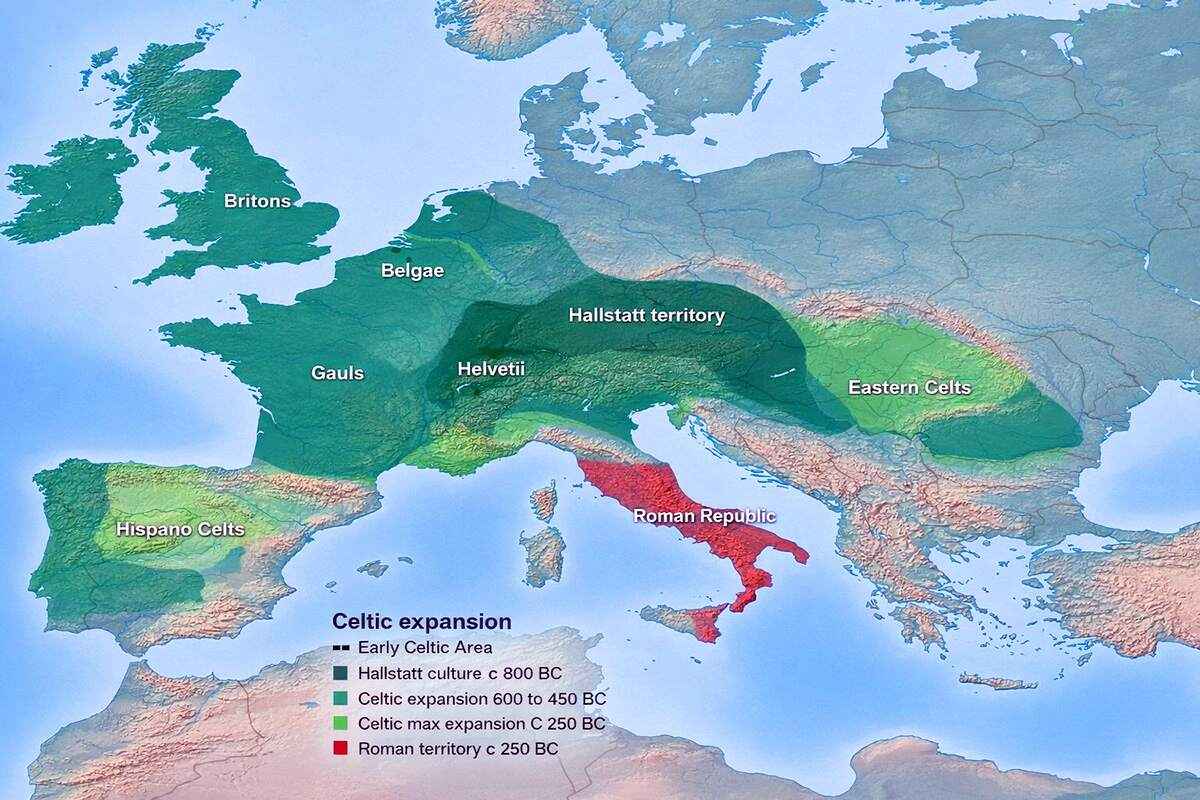
Let’s first define Celtic, because it will give you a richer view of these holidays’ origins.
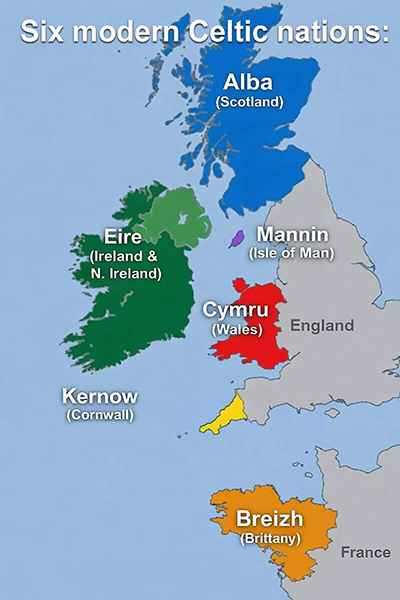
The six modern Celtic nations below are the origin of this category’s holidays. These areas sit along the western edge of Europe. Some refer to this region as the “Celtic fringe.”
Long before Roman rule, Celtic people lived and migrated across much of Europe. However, their languages lasted the longest in these six regions.
Today, there are basically six recognized Celtic Nations: But, it would also depend on who you ask.
The Origins of Celtic Pagan Holidays
 Ireland is one of the core Celtic nations. It has strong Gaelic roots, a living Celtic language, and lasting traditions. Celtic people settled there around 500 BC. They shaped daily life through tribal rule, iron tools, and oral law. Poetry, music, and Brehon law grew from this period.
The Irish are a Gaelic people. Customs, stories, and sports like hurling still reflect this past. English is common today, but Irish (Gaeilge) remains central to Celtic identity. Irish closely links to Scottish Gaelic and Manx. Unlike other Celtic regions, Ireland is a sovereign nation. Ireland avoided Roman conquest, which helped preserve language and customs. But, Celtic culture still evolved and changed.
Scotland is also a Celtic nation. Scottish Gaelic still survives, though fewer speak it today. Traditions like bagpipes and tartans reflect this heritage. Scotland stands with Ireland, Wales, Brittany, Cornwall, and the Isle of Man as a modern Celtic nation.
Wales is a country within the UK, but not a sovereign state. Still, it is clearly Celtic. Welsh is a Brythonic (Brittonic) Celtic language. Harp music and poetry are key traditions.
The survival of the Welsh language helped shape a strong national identity after Roman rule.
Brittany sits on a peninsula in northwest France. Despite deep Celtic roots, many do not link France with Celtic history. The area has a rugged coast, medieval towns, and strong local customs.
Cornwall lies in southwest England and feels different from much of the country. Its peninsula location helped protect its Celtic identity. Cornwall is an English county, yet holds national minority status. Many see it as a nation within England.
The Isle of Man sits in the Irish Sea between England and Ireland, self-governed as a Crown dependency. The island blends Celtic and Viking history.
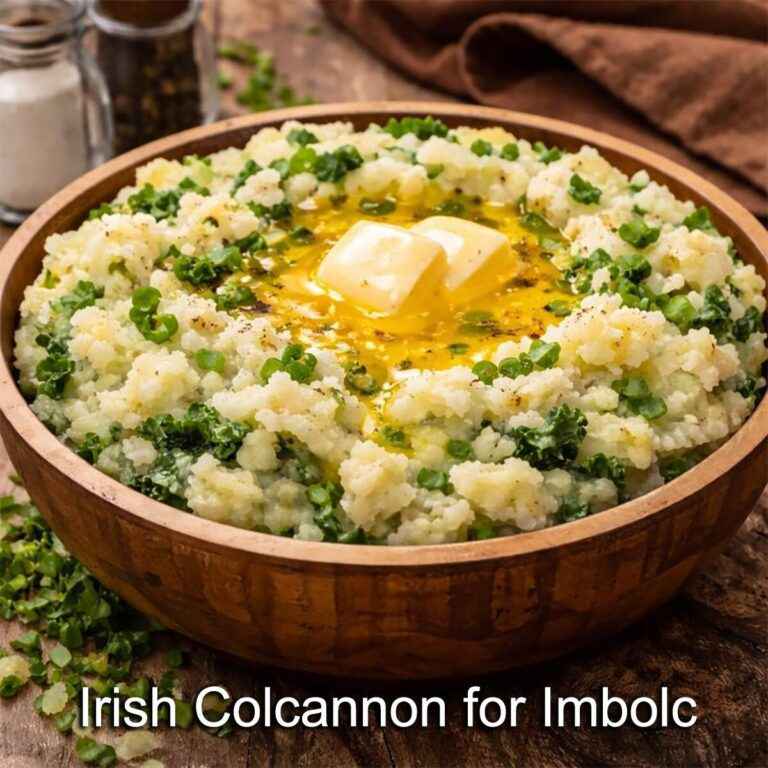
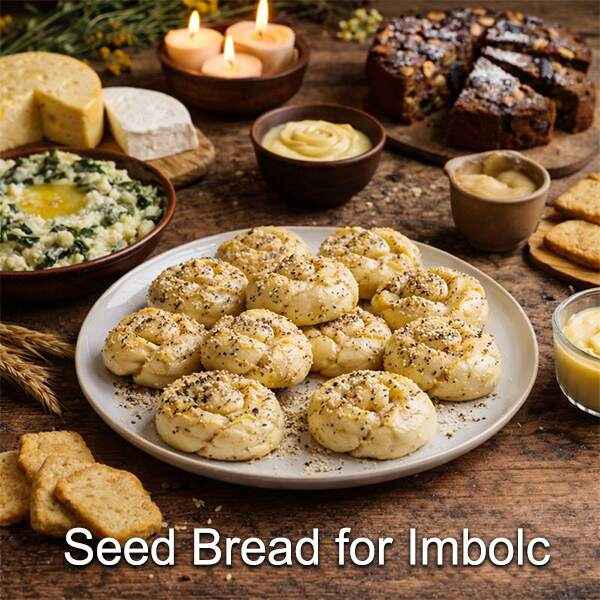
Imbolc
- February 1 to 2.
- Marks early spring and the start of lambing.
- Connected to the goddess Brigid long before Christian tradition.
- Rooted in farming and seasonal life.
Beltane
- April 30 to May 1.
- A May Day festival centered on fire and new life.
- Well recorded in Irish and Scottish history.
- Fire, flowers, and sexual symbols come from ancient practice.
Lughnasadh (Lúnasa)
- August 1.
- The first harvest of the year.
- Named after the god Lugh.
- Linked to games.
Samhain (my favorite pagan holiday)
- October 31 to November 1, though some celebrate this on November 2.
- Ancient Gaelic festival ending the harvest and welcoming winter.
- Recorded in early Irish texts from before Christianity.
- A liminal time linked to ancestors and thinning boundaries.
These above four festivals are also known as the four “fire festivals”
Celtic Pagan Holidays: Solstice and Equinox
These Celtic pagan holidays were perhaps less celebrated. However, for some they have greater significance in witchcraft. The dates of equinoxes and solstices can do a vary.
This variation occurs because the tropical year, which measures Earth’s orbit around the sun, is not exactly 365 days but roughly 365.25 days, causing the exact moment of the solstice to shift.
The dates change because solstice is based on the precise astronomical moment the Sun reaches its northernmost point, not a fixed calendar date.
The dates of an equinox are not always the same. They vary slightly from year to year, typically falling between March 19–21 for the spring equinox and September 21–24 for the autumn equinox. This fluctuation occurs because the Earth’s orbit takes roughly 365.25 days to complete, not an exact 365 day.
Each year, the equinox occurs about 6 hours later than the previous year, with a reset occurring during leap years. Time zone differences can also cause an equinox to fall on a different day.
The dates of solstices change too. June 20–22 for the summer solstice and December 20–22 for the winter solstice in the Northern Hemisphere.
So, you have eight fairly standard Celtic pagan holidays. And, put all these together and you get the Wiccan “Wheel of The Year”.
 Ireland