
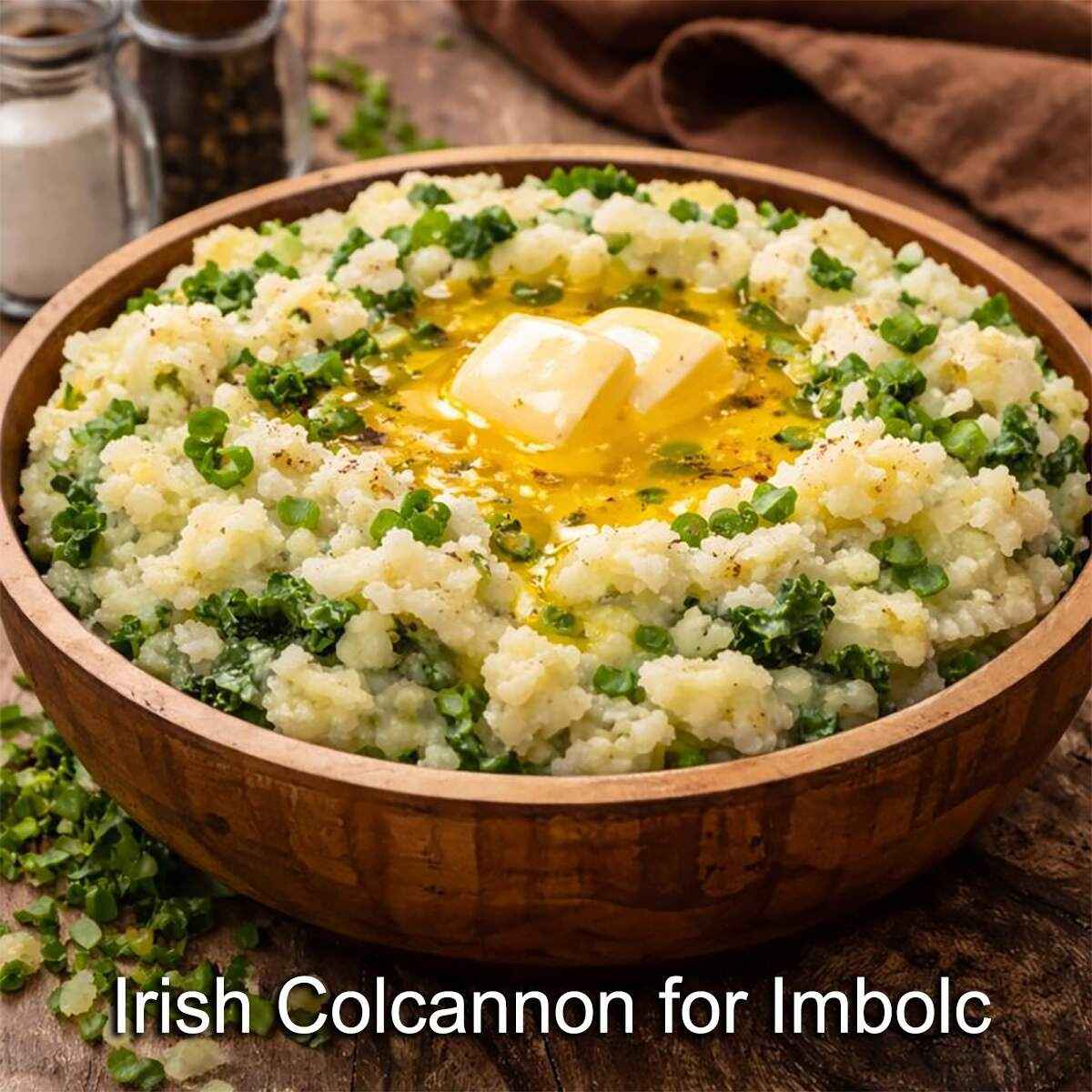
Imbolc is one of those festivals that doesn’t ask for perfection, but it does ask for a good colcannon recipe. It asks for warmth, honesty, and food that actually fills you up. Historically, this makes sense. Imbolc lands in early February, when winter has loosened its grip just enough to remind you that spring is coming, but not enough to be generous about it.
 Many consider the foods of Imbolc’s entrance not a feast but more like hearty survival. But I do consider it a feast. And a surprisingly affordable one.
Enter Colcannon
Colcannon is old Irish comfort food. It’s potatoes, greens and no small amount of butter. That’s it. And yet, it has lasted for centuries because it does exactly what Imbolc needs it to do. It feeds people at the hinge point of the year. Especially with the other foods commonly served at a full Imbolc meal.
A Quick Bit of Imbolc History (Before We Cook)
Imbolc is a Gaelic seasonal festival marking the midpoint between the winter solstice and the spring equinox. Traditionally, it’s tied to Brigid, hearth fires, dairy, renewal, and the return of light. The name itself is also often linked to milk, lambing season, and the slow reawakening of the land.
In practical terms, Celtic households at this time relied on:
- Stored root vegetables
- Hardy winter greens like kale and cabbage
- Butter and dairy from overwintered livestock
Because fresh food was limited, waste was not an option. Meals had to stretch. Colcannon comes straight out of that reality.
Traditional Colcannon Recipe
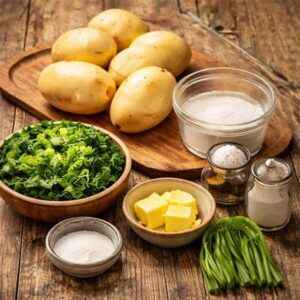 This recipe serves 4 to 6 people and takes 35 minutes total. No nonsense.
Ingredients
- 4 russet potatoes (2 to 2½ pounds), peeled and cut into 1½-inch pieces.
- Salt, to taste
- 5 to 6 tablespoons unsalted butter, plus more for serving
- 3 lightly packed cups chopped kale, cabbage, chard, or other leafy green
- 3 green onions, minced (about ½ cup)
- 1 cup milk or cream
You can use gold potatoes instead, lower glycemic and can even skip the peeling (or not).
Prep time: 10 minutes, cook time: 25 minutes. Total time: about 35 minutes
Step 1: Boil the Potatoes
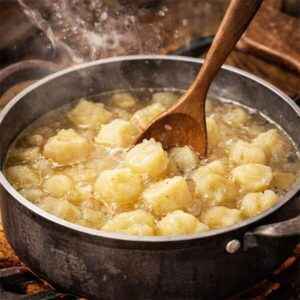 Put the potatoes in a medium pot and cover with cold water by at least an inch. Add 2 tablespoons of salt. Bring to a boil.
Boil until the potatoes are fork-tender, about 15 to 20 minutes. Drain in a colander and set aside.
I take this time to chop or mince all the green things I have decided on. For me, I use kale and green onions, scallions work perfect, and some regular brown or yellow onion.
Use as much or as little as you like. I add quite a bit; because kale and other greens tend to really shrink as they cook too.
Some may wish to add some dried parsley and chives too. Don’t worry, because once you start cooking them, they will soften and add a lot flavor. Leeks have to be cut thin if you are using them and need to sauté longer.
Step 2: Cook the Greens and Green Onions
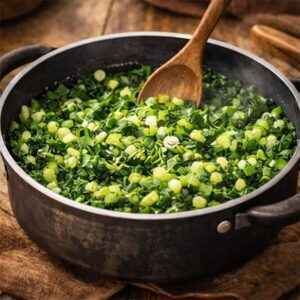 Return the pot to the stove and set it over medium-high heat. Add the butter and let it melt fully.
Once hot, add the chopped greens. Cook for 3 to 4 minutes, until they wilt and release some moisture.
Add the green onions and cook 1 minute more.
This smells like winter finally admitting defeat.
Now, if you are rolling with leeks, cut them thin and give them a few minutes head start. Then add all your other green things.
This is also where you can add your dried parsley and chives if you are using them.
Step 3: Mash the Potatoes
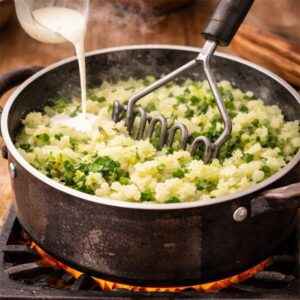 Lower the heat to medium. Pour in the milk or cream and mix it into the greens.
Add the cooked potatoes back to the pot. Use a fork or potato masher to mash everything together. Don’t overwork it. Colcannon should be rustic, not whipped into submission.
Season with salt and pepper to taste.
Serve hot with a knob of butter melting right in the center, because of course you do.
a knob if memory serves, is about 3 tablespoons of butter. Make a well in the potatoes, pour in your melted butter and serve.
Variations That Actually Make Sense
This is where old food shines. You use what you have.
- Substitute half the potatoes with parsnips for a slightly sweeter, earthier version
- Add chives or leeks for a softer onion note leeks take a little longer to sauté.
- Stir in crispy bacon if you want a heartier, stick-to-your-bones meal.
- You can also use left over ham.
None of these are modern twists. They’re historically accurate adjustments.
Make Colcannon Twice, Eat Thrice
 Here’s the real kitchen wisdom.
Double the recipe. Eat half for dinner. Save the rest.
Because tte next day, form the leftover colcannon into patties and pan-fry them in butter to make colcannon cakes. They’re crisp on the outside and soft inside, which is exactly what breakfast should be.
Top them with a jammy egg. Poached or sunny side up. Runny yolk required.
Breakfast? Snack? Or, Late-night food when the house is quiet? Yes.
Colcannon and Imbolc Belong Together
 Imbolc isn’t flashy. It’s domestic magic and all about tending the hearth. It’s feeding people before you feed ideals. But ideals are talked about around the table.
Colcannon reflects that perfectly. It’s humble. It’s practical. It honors the season without pretending winter is over yet.
You don’t need exotic ingredients. You need a pot, some butter, and a willingness to slow down for thirty-five minutes.
That’s the magic.





I cant believe how controversial the importance of butter in colcannon is! Who knew such a simple ingredient could stir up such a debate? Personally, I say bring on the butter!
I never realized the significance of butter in Colcannon until reading this article. Who knew a simple ingredient could hold such cultural importance? Makes me appreciate it even more!
I cant believe they didnt mention the importance of using Irish butter in the Colcannon recipe! Its a game-changer, trust me. Butter makes all the difference in this dish. 🍀🧈
Butter isnt the only key ingredient in Colcannon. But it sure is a tasty one! 🥔🍀
I cant believe there are people out there who dont understand the significance of butter in Colcannon! Its like the secret ingredient that ties everything together. Butter matters, people!
Butter was a significant “add on” during the season … a luxury if you will. Imagine not having it for a long stretch!