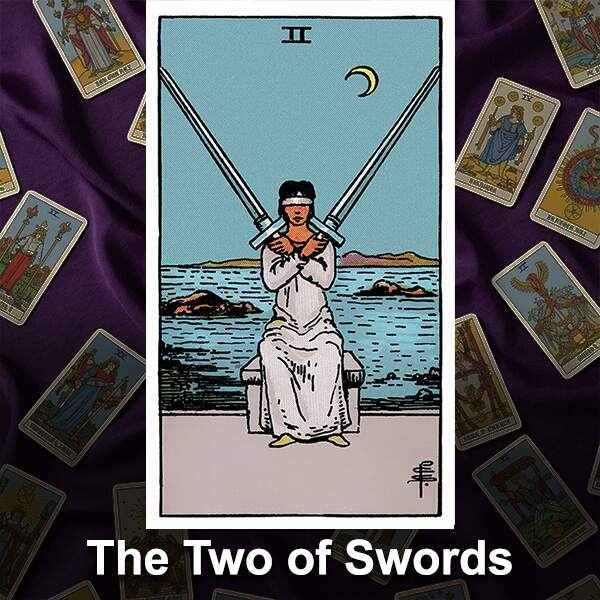
The Two of Swords follows the Ace and introduces the first tension within the suit of swords. In the P.E.N.S.I. system, this card marks the moment where truth is present, but choice is avoided.
 The mind and the heart are not in agreement. This card speaks to suspension and emotional neutrality. P.E.N.S.I. frames it as the pause where thought blocks feeling in order to maintain balance.
Two of Swords, 1st Layer of Context: Position
As usual, we’re not into a tarot spread yet, but position is the first layer of context in P.E.N.S.I. Depending on the designated position of the spread, the Two of Swords can change meaning.
It can land in past, present or future positions. All cards take on context given by the position a card falls in. Context also comes from the intent of the spread, not only from past, present, or future positions. For instance, is it a love or romance spread, or is the pull about money and success?
Once I have covered all the cards, I will start covering tarot spreads.
2nd Layer of Context: Element is Air
If you recall from the first P.E.N.S.I. lesson, air rules thought, speech, and judgement. In the Two of Swords, air becomes still. Thought is active, but expression is suppressed.
This is the quiet tension of knowing something but choosing not to engage with it. Silence is used as a shield.
3rd Layer of Context for Two of Swords: Numerology of Two
If you recall from the first P.E.N.S.I. lesson, two represents polarity, choice and balance. It is the awareness of opposing forces. In swords, this becomes mental stalemate.
Two here is not harmony. It is a holding pattern. Neither option is chosen, so energy remains locked.
Fourth Layer of Context: Symbolism
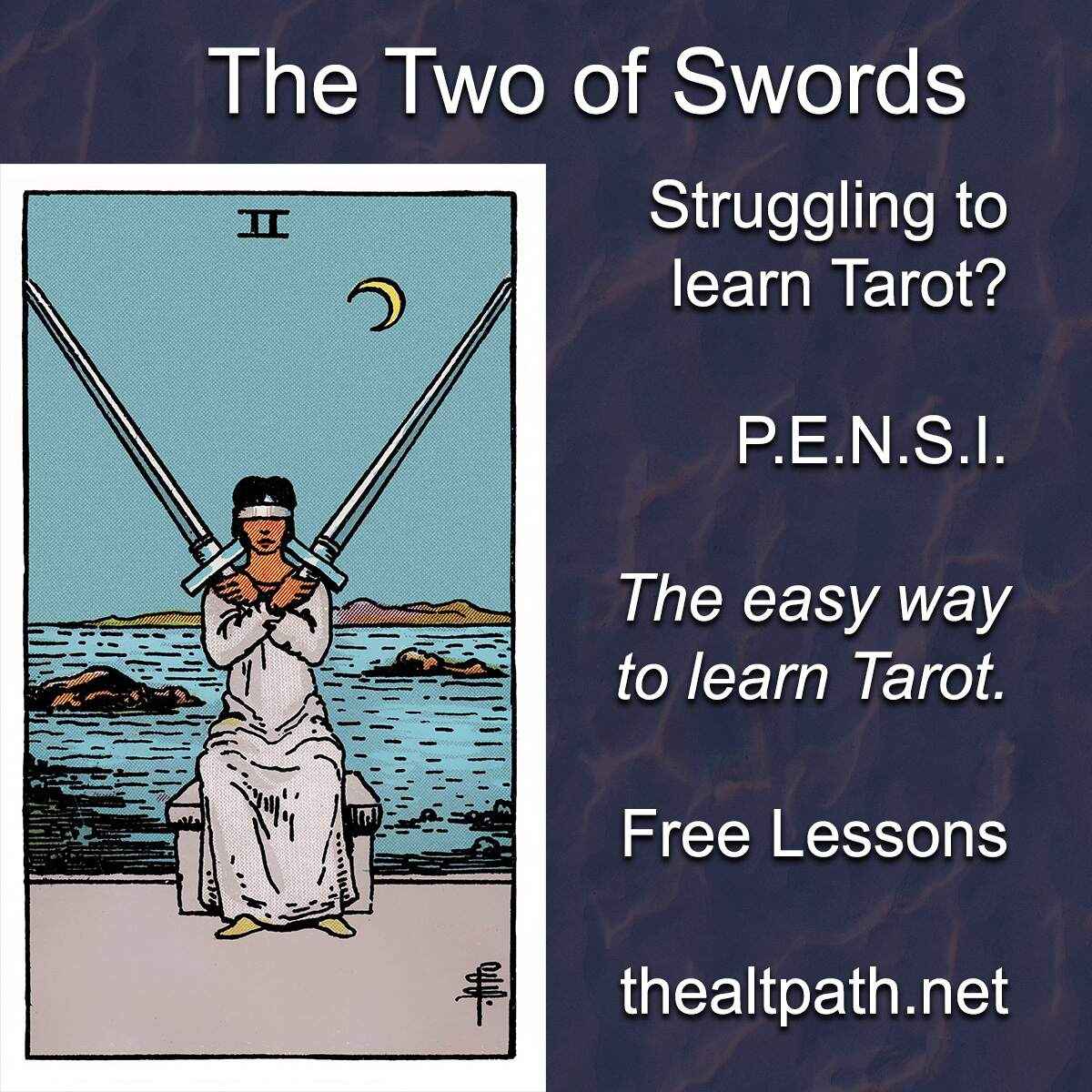
A blindfolded figure sits with two swords crossed over the chest. The posture is defensive and closed. The blindfold represents chosen blindness, not ignorance.
Water rests behind the figure, symbolizing emotion held at bay. The swords cross in equal measure, showing balance through resistance rather than resolution.
This card warns that balance achieved through denial cannot last forever.
Fifth Layer of Context: Intuition
 Now, putting all the other P.E.N.S.I. layers together in a reading, you will surprise yourself with what you know. I consider where the querent is emotionally frozen. Often, they already understand the truth, but fear what happens once it is acknowledged.
I tell clients this card buys time, but at a cost. Eventually, a choice must be made.
Ace of Swords: Reversed Meaning
Reversed, the Two of Swords shows the breakdown of avoidance. Information pushes through. Emotions surface whether invited or not.
Sometimes this brings relief. Other times it brings tears. Either way, the stalemate ends. This is being forced to face suppressed emotions.
Sympathetic Decks
Most decks stay close to the Rider-Waite-Smith imagery for this card. Some modern decks soften the blindfold symbolism, while others emphasize emotional shutdown.
In my Witches’ Tarot by Ellen Dugan, the card leans into inner conflict rather than outer defense. Other decks may depict sharper tension, but the meaning remains consistent.
Correspondences
Astrology: Air sign influences
Element: Air
Season: Autumn
Number: Two
Tarot Spell: Upright Two of Swords
Place the Two of Swords on your altar. Light a gray or white candle. Sit quietly with your eyes closed. Name the choice you are avoiding. Do not decide yet. Simply acknowledge it exists. Let the candle burn safely.
Tarot Spell — Reversed Ace of Swords
Lay the Two of Swords reversed on your altar. Light a blue candle. Remove the blindfold in your mind. Speak one truth you have been withholding. Sit with the card until tension eases.
Final Note
The Two of Swords does not remove truth. It delays it. Balance built on silence will eventually demand resolution.
 Sign up now, free and secure, don’t miss out on free tarot lessons, witchcraft, spells, rituals, and money-saving codes and coupons for our website and physical store. Follow us on Instagram, Facebook (Meta) or TikTok.
We have many Divination Tools; tarot, oracle, pendulums, crystal balls etc. on our site and in our metaphysical shop, come visit!
Today’s Featured Deck
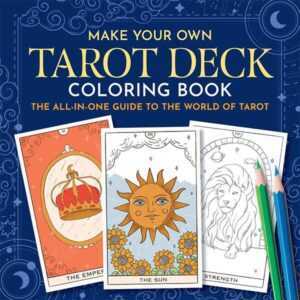 Make tarot personal with the Make Your Own Tarot Deck Coloring Book. This creative book turns your tarot practice into an artful experience. You can relax, color, and craft a deck that fully reflects your energy.
Inside the book, you will find all 78 tarot cards waiting for your personal touch. Each page includes intricate illustrations designed to inspire your creativity. Moreover, the detailed artwork encourages you to explore your intuition while you color.
Make Your Own Tarot Deck includes all 78 tarot cards: 22 Major Arcana and 56 Minor Arcana.
Relax and personalize your deck through coloring and crafting.
Portable paperback format makes it ideal for home or travel use.


I am so living this card right now! Kind of like feeling damned if you do and damned if you don’t.
Hi Giana – I have been there, more times than I care to count. Factor your emotions into it, you have feelings for reason. We are usually better off not making emotional decisions, but we should not deny them either.
Wow, after reading about the different layers of context for the Two of Swords, I cant help but wonder – do you think the element of Air really influences the cards meaning or is it just a coincidence? Thoughts?
Hello Jorge, yes …. Air, as an element “rules” all the swords in Tarot. The four elements are deeply tied to tarot cards, one element for each suit of pips (the 1-10 of each suit). Air rules communication and speech, moral turpitude, and places like libraries and courthouses, but also mountain tops and plains. Air is essential as all elements are. I suggest looking up each element and their correspondences, that will help you learn and deepen your understanding of the tarot.
I always thought of the two of swords as just indecision … clearly there’s more to it.
I think it can be, but more about working through it.
You don’t seem to use or list many correspondences in these tarot lessons, just curious. There are many.
Hello Frances, and you are correct, there are many. A great number of them come from the Golden Dawn era and thinking. In my lessons, I abstain from all but a few simple ones. This is because the purpose of these lessons is to help someone learn to read tarot easier, but also help them be effective readers. I go on about dozens of correspondences, but that doesn’t help a seeker learn to read tarot. Such things can help finesse a reader’s insights down the road. My lessons focus more on association rather than memorization, some correspondences people make natural or easy associations with. Other correspondences, not so much. 😉 Blessings!