Every year, around June 20th or 21st, the Litha Summer Solstice arrives with the longest day and shortest night of the year.
For Pagans and witches, this marks Litha, the point when the Sun reaches its greatest strength and the growing season stands in full bloom.
At first glance, it seems like a simple celebration of sunlight. However, the summer solstice carries a deeper lesson.
While the Sun stands at its peak, the wheel has already begun to turn. From this day forward, daylight slowly decreases as we move toward autumn and eventually the Winter Solstice.
In other words, nature celebrates victory and whispers a reminder that every peak eventually gives way to change.
Nature is subtle like that. Humans, on the other hand, usually require several obvious warnings and a personal crisis.
Litha Summer Solstice Sabbat
Litha is one of the eight Sabbats observed within the modern Wheel of the Year. It falls between Beltane and Lughnasadh and represents abundance, vitality, fertility, success, and the power of the Sun.
Unlike some Pagan festivals that focus on beginnings, Litha celebrates fulfillment. Seeds planted in spring have become thriving plants. Projects began months ago have gained momentum. Life appears vibrant, active, and productive.
Yet the Solstice also contains a paradox. Although the Sun reaches its greatest height, its dominance begins to fade almost immediately afterward. Therefore, Litha reminds us that growth and decline often exist side by side.
This balance between celebration and awareness remains one of the season’s most important spiritual lessons.
Ancient Roots of Litha
People have celebrated the Summer Solstice for thousands of years. Long before modern calendars existed, ancient cultures tracked the movement of the Sun and organized their lives around seasonal cycles.
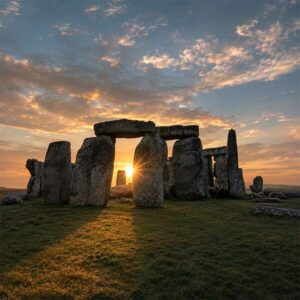 Stonehenge in England remains one of the most famous examples. Its alignment with the Solstice sunrise continues to attract visitors each year. Likewise, many ancient monuments throughout Europe, Asia, and the Americas reveal similar solar alignments.
Agricultural societies depend on these seasonal markers. Farmers needed to understand planting and harvest cycles, while communities relied upon predictable seasonal patterns for survival.
As a result, Solstice celebrations often included feasts, rituals, music, dancing, offerings, and public gatherings. These events honored the forces that sustained life and strengthened community bonds.
Although technology has changed dramatically, human dependence on nature has not disappeared. We simply hide it behind grocery stores, climate control, and delivery apps.
Litha Summer Solstice, The Sun’s Peak
Astronomically speaking, the Summer Solstice occurs when the Earth’s Northern Hemisphere reaches its maximum tilt toward the Sun. This creates the longest period of daylight and the shortest period of darkness of the year.
Many people mistakenly assume the Solstice is the hottest day of summer. However, that is rarely the case. Because land and water require time to absorb and release heat, the warmest temperatures often arrive weeks later.
This delay is known as seasonal lag. The Sun may reach its highest point in June, but the accumulated heat continues building throughout much of the summer.
For witches and Pagans, this astronomical event serves as a powerful reminder that causes and effects rarely occur at the same moment. Energy builds over time. Actions create momentum. Results often arrive later than expected.
Nature demonstrates this principle constantly if we pay attention.
Fire Festivals
Fire has long served as one of the most important symbols of the Summer Solstice. Throughout Europe, communities lit great bonfires to honor the Sun’s power and encourage prosperity, protection, and fertility.
In some traditions, people jumped over fires for luck or blessing. In others, villagers carried torches through fields to encourage healthy crops. Certain regions even rolled burning wheels downhill to symbolize the Sun’s journey across the sky.
These customs reflected more than superstition. Fire represented life, transformation, purification, and the visible power of the Sun itself.
Litha is not one of the four fire festivals, however, even though fire is a huge symbolism during the summer solstice.
Modern practitioners continue many of these traditions in adapted forms. Bonfires, candle rituals, lanterns, and solar symbols remain common features of contemporary Solstice celebrations.
Fortunately, most of us can honor the Sun without recreating every historical fire-related decision our ancestors made.
That is probably best for everyone involved.
The Wheel of The Year
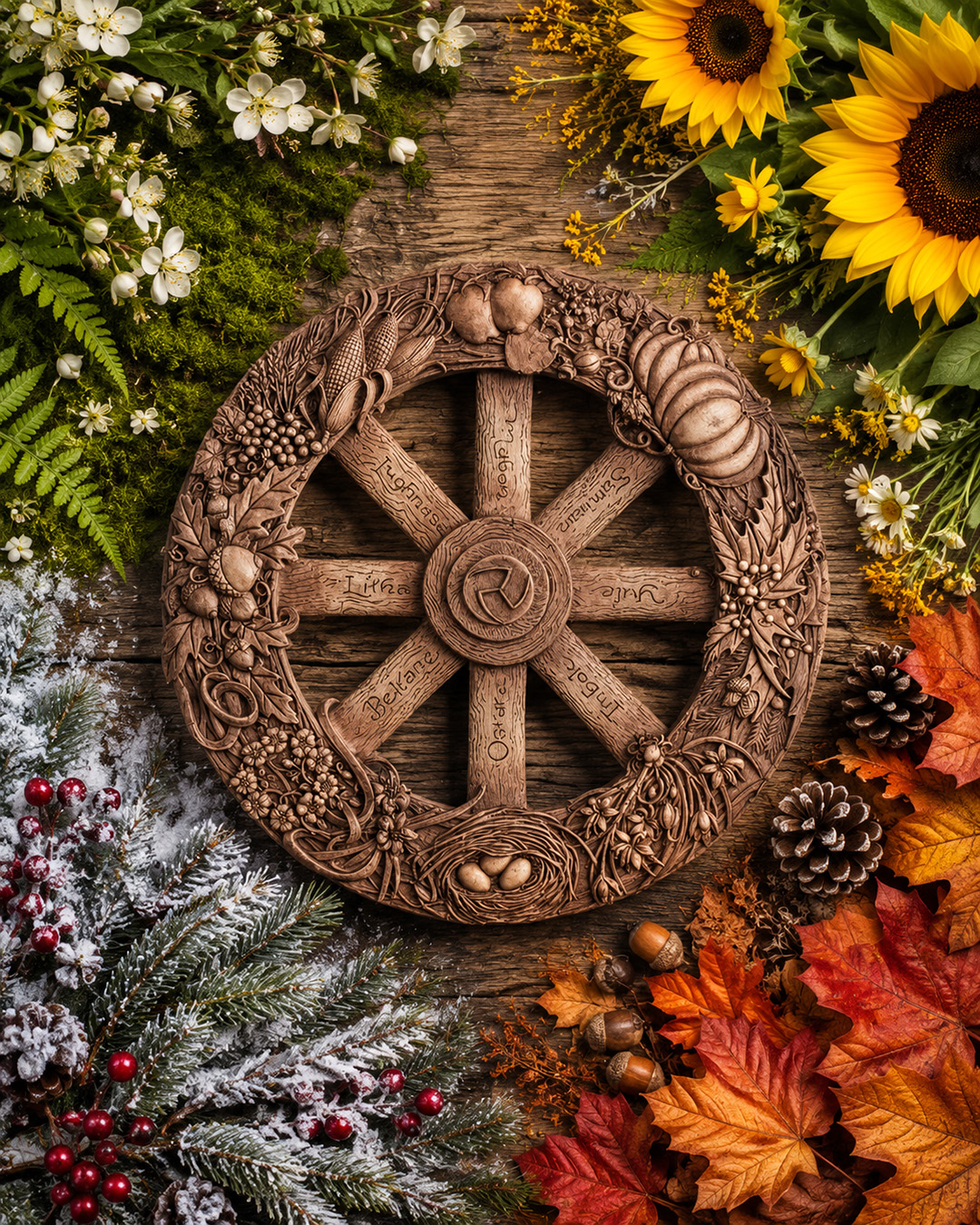 The Summer Solstice occupies a unique position within the Wheel of the Year. It stands as both a culmination and a turning point.
At the Spring Equinox, daylight and darkness balance before the light begins to dominate. Beltane follows with themes of fertility, passion, growth, and creation. Then Litha, the summer solstice, arrives as the height of solar power.
Afterward, the wheel gradually shifts toward harvest.
Lughnasadh celebrates the first harvest. Mabon marks the Autumn Equinox and the return of balance between light and dark. Samhain honors ancestors and the thinning veil between worlds. Eventually, Yule arrives with the Winter Solstice and the rebirth of the Sun.
Therefore, Litha serves as a bridge between expansion and harvest. It celebrates achievement while preparing us for the next stage of the cycle.
Visit the Celtic Holidays category page for more about these holidays and explore the holidays specifically.
Solstice Customs
Traditional Solstice customs vary widely across cultures, yet many themes remain remarkably consistent.
People gather outdoors. Communities share food. Families celebrate abundance. Rituals focus on gratitude, protection, and blessings for the months ahead.
Many practitioners rise before dawn to greet the Sun. Others create flower crowns, decorate altars, gather seasonal herbs, or host community gatherings. Seasonal foods such as berries, honey, bread, and fresh vegetables often appear at Solstice feasts.
Additionally, some magical traditions suggest that herbs collected on the Solstice carry enhanced spiritual potency. Whether viewed symbolically or literally, these practices encourage people to engage directly with the season.
That participation matters. Spirituality becomes much more meaningful when it involves actual experience rather than endlessly collecting information about experiences.
Witchcraft
For witches, aside from Litha, the Summer Solstice provides excellent opportunities for magical work related to success, confidence, prosperity, protection, creativity, and personal empowerment.
Solar energy traditionally corresponds with courage, leadership, clarity, vitality, and illumination. Consequently, many practitioners perform spells designed to strengthen goals already in motion rather than initiate entirely new ventures.
I often view Solstice magic as a checkpoint rather than a starting line. It provides an opportunity to evaluate progress, celebrate accomplishments, and make adjustments before the harvest season arrives.
Common correspondences include sunflowers, oak, St. John’s Wort, calendula, gold candles, fire symbolism, and solar imagery.
Of course, no herb, candle, crystal, or ritual substitutes for effort. The universe has many wonderful qualities, but completing our unfinished projects generally is not one of them.
Lessons of Light
Beyond its rituals and celebrations, the Summer Solstice offers several enduring spiritual lessons.
First, abundance deserves recognition. Too often, people focus entirely on what remains undone while overlooking what has already been achieved.
Second, every peak contains the seeds of change. Even as daylight reaches its maximum, its decline has already begun.
This reality does not diminish the celebration. Instead, it makes the moment more meaningful.
Third, balance requires awareness. Growth without reflection creates exhaustion. Reflection without action creates stagnation.
The Solstice encourages both gratitude and movement.
These lessons appear all throughout nature. Consequently, they remain just as relevant today as they were thousands of years ago.
Final Thoughts
The Summer Solstice celebrates more than sunlight. It honors the rhythms that shape life itself.
It reminds us to recognize abundance, appreciate growth, and understand that every season serves a purpose.
Whether you observe Litha through ritual, gather around a fire, watch the sunrise, or simply spend time outdoors, the Solstice invites you to reconnect with the natural world.
The Sun may stand at its highest point today. However, the deeper wisdom lies in the turning of the wheel itself.
Everything changes, moves and returns in its season.
Thankfully, nature manages this process remarkably well without consulting social media first.
 Sign up now, free and secure, don’t miss out on free tarot lessons, witchcraft, spells, rituals, and money-saving codes and coupons for our website and physical store. Visit our physical store! Follow us on Instagram, Facebook (Meta) or TikTok.